Compound Spotlight: BPC-157 in the Research Literature
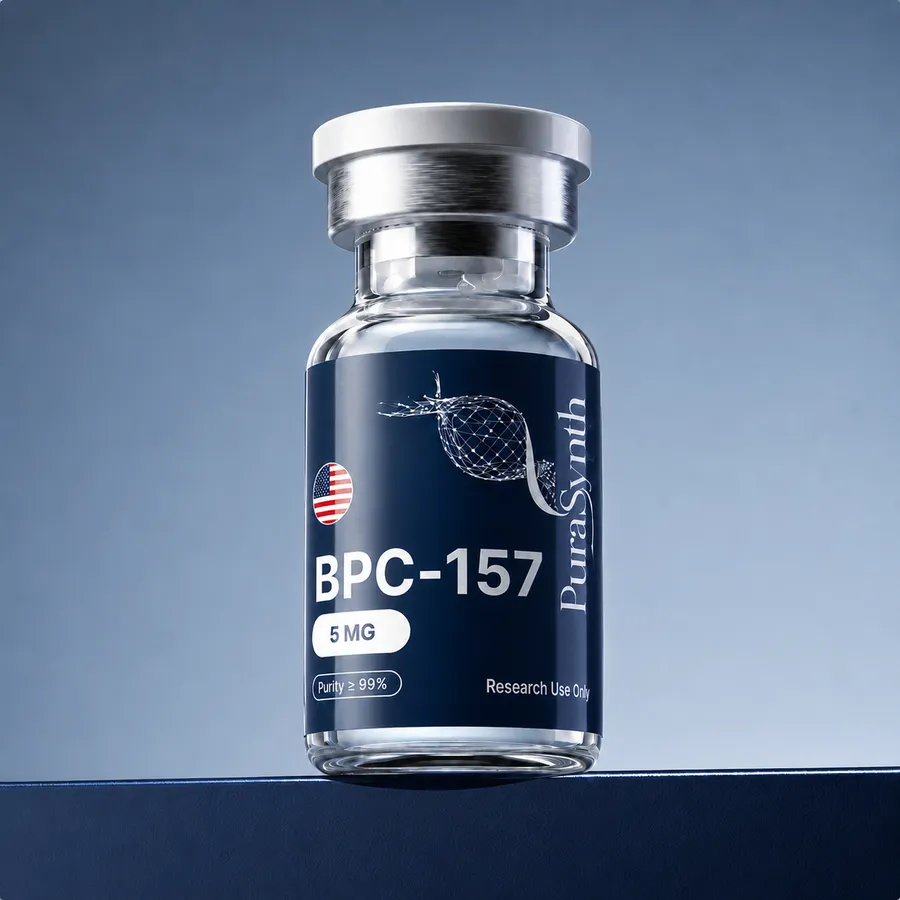
A research-focused look at BPC-157: a synthetic pentadecapeptide supplied as a lyophilized reference material for in-vitro and preclinical study.
By PuraSynth Labs Research Team
BPC-157 is a synthetic peptide that has become a frequent subject of preclinical and in-vitro investigation, recurring across tissue, cellular, and animal-model research contexts in the experimental literature. As a reference material, it is valued for its well-characterized sequence and its reported stability under laboratory handling. This spotlight summarizes what BPC-157 is chemically, how it is supplied for research, and the broad areas in which it has been studied, strictly as documented in published preclinical and in-vitro work.
Everything described here pertains to BPC-157 as a research-grade reference material intended for in-vitro and laboratory use only. Nothing on this page describes outcomes in humans or animals, and no statement should be read as guidance for use in any living subject.
What BPC-157 Is, Chemically
BPC-157 is a synthetic pentadecapeptide, meaning a single chain of 15 amino acids. Its sequence corresponds to a partial fragment originally identified within a protein associated with gastric juice, and the standalone peptide is produced by chemical synthesis rather than extraction. In the literature it is sometimes referred to as a stable gastric pentadecapeptide, a designation that reflects both its sequence origin and the chemical robustness that distinguishes it from many shorter or less stable peptides.
Because it is a defined synthetic sequence, BPC-157 has a fixed amino acid composition and a corresponding molecular formula and mass. Researchers should treat the lot-specific Certificate of Analysis (COA) as the authoritative source for exact molecular weight, sequence confirmation, and purity, rather than relying on generalized figures.
How It Is Supplied for Research
BPC-157 is provided as a lyophilized (freeze-dried) powder, consistent with how most research peptides are stabilized for shipping and storage. The lyophilized form supports a longer shelf life and is reconstituted in the laboratory only at the point of experimental use. Each lot is intended for in-vitro and preclinical research applications and is accompanied by analytical documentation.
- Format: lyophilized peptide reference material for laboratory use
- Documentation: lot-specific COA reporting purity (commonly assessed by HPLC) and identity (commonly confirmed by mass spectrometry)
- Intended scope: in-vitro and preclinical research only — not for use in humans or animals
Areas Investigated in the Literature
BPC-157 has been examined across a range of preclinical and in-vitro models. The points below describe categories of published research interest, framed in the third person and past tense. They are not effects, benefits, or expected outcomes, but rather descriptions of how the peptide has been used as an experimental variable.
- Tissue-level research: preclinical and animal-model studies have investigated BPC-157 in connection with connective and soft-tissue research endpoints
- Cellular research: in-vitro work has used the peptide to study cell-level processes such as migration and proliferation in cultured systems
- Gastrointestinal research models: given its sequence origin, preclinical studies have explored it within gastrointestinal experimental models
- Vascular and angiogenesis research: laboratory studies have examined associated signaling and vascular-related endpoints in model systems
- Neurological and other organ-system models: the peptide has appeared as a study variable across additional preclinical research areas
Compliance note
The categories above describe what has been studied in published preclinical and in-vitro research. They are not claims about what BPC-157 does, and they do not describe any therapeutic, health, or performance outcome in a living subject.
Stability as a Research-Handling Advantage
A practical reason BPC-157 recurs in the literature is its reported chemical stability relative to many comparable peptides. This durability is frequently noted as a convenience for experimental design, since a more robust molecule is generally easier to store, reconstitute, and work with across the timeline of a study. Stability here refers strictly to the physical and chemical durability of the reference material under laboratory conditions, not to any biological property.
Handling and Storage in the Laboratory
Handling guidance for BPC-157 mirrors standard practice for lyophilized research peptides. These notes describe laboratory technique for managing a research material; they are not instructions for preparing anything for administration to a living subject.
- Store the sealed, lyophilized vial cold and protected from light; long-term storage is typically at freezer temperatures per the COA or product documentation
- Allow the vial to equilibrate to room temperature before opening to reduce condensation on the powder
- For in-vitro work, reconstitute with an appropriate laboratory solvent such as sterile or bacteriostatic water, adding solvent gently down the vial wall rather than directly onto the powder
- Avoid vigorous agitation; swirl gently to dissolve and minimize mechanical stress on the peptide
- Aliquot reconstituted material to limit freeze-thaw cycles, and label aliquots with lot and date for traceability
Verify Purity Against the COA
As with any reference material, the value of an experiment depends on knowing exactly what is in the vial. Before designing or interpreting work with BPC-157, researchers should review the lot-specific COA to confirm purity, identity, and the analytical methods used. Matching experimental records to the documented lot supports reproducibility and sound data interpretation.
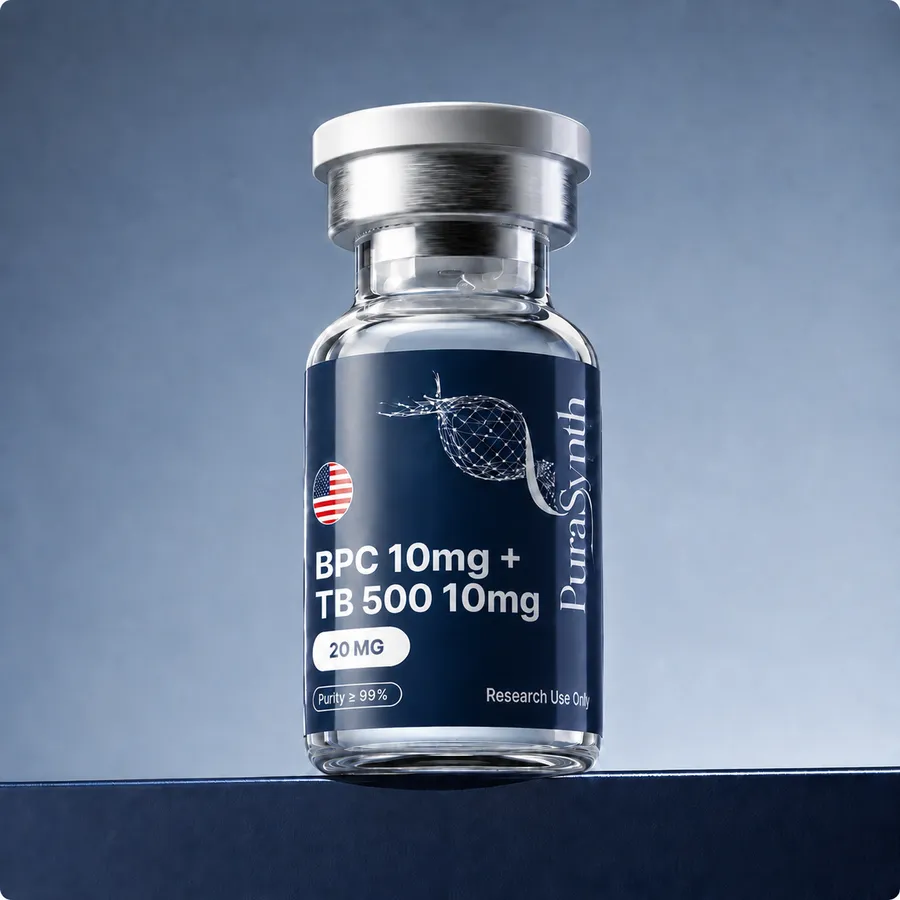
For laboratories studying peptide combinations, PuraSynth Labs also offers BPC-157 as part of a research blend with TB-500, supplied under the same lyophilized, research-only conditions and accompanied by its own analytical documentation. The blend is intended solely for in-vitro and preclinical research and carries the same handling and compliance considerations described above.
Research Use Only. The information above is provided for educational purposes and describes laboratory and in-vitro research only. All compounds referenced are sold strictly as research materials — not for human or veterinary use, consumption, diagnostic, or therapeutic applications. Nothing here is medical advice.