
DSIP: Research, Sleep Evidence, Safety, and U.S. Status
xplore DSIP research, proposed sleep effects, safety concerns, human evidence, and current regulatory status in the United States.
By PuraSynth Labs Research Team
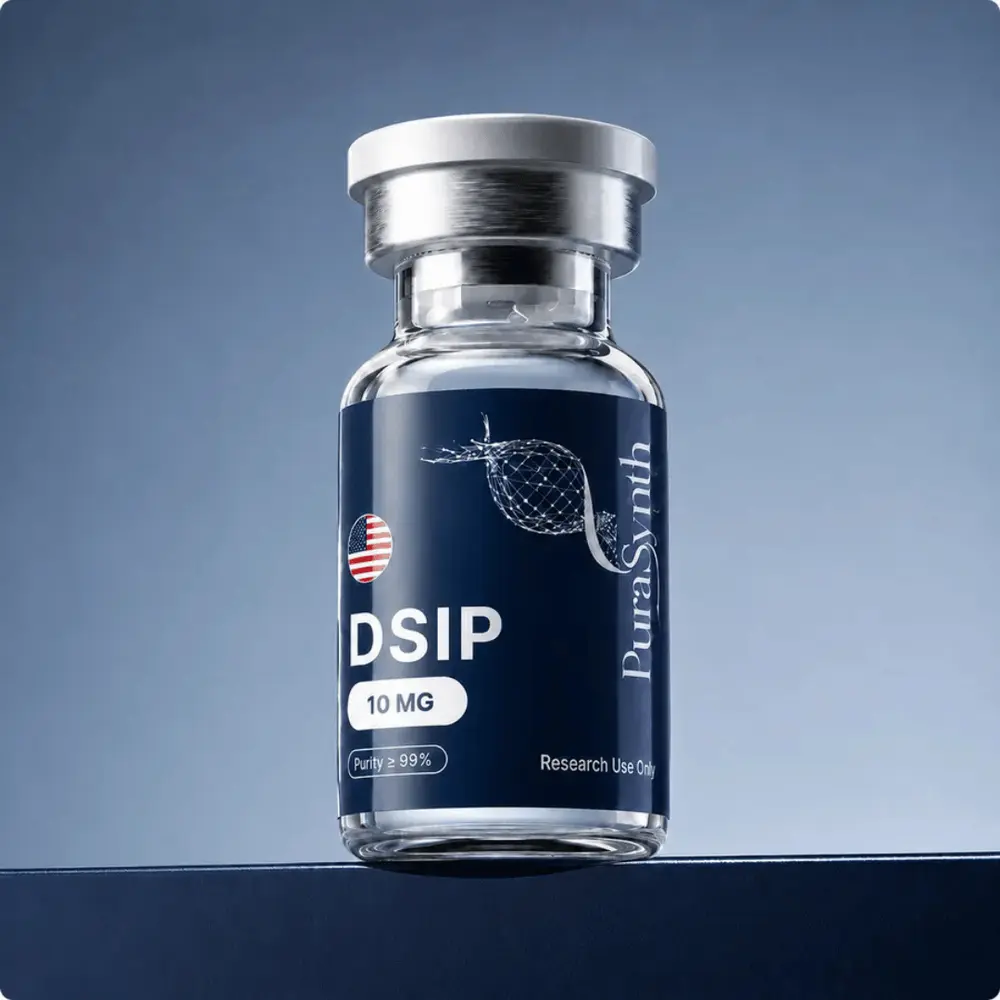
DSIP is a synthetic and naturally studied peptide that attracts interest from people researching sleep quality, stress responses, neurological signaling, and peptide science. Its full name—delta sleep-inducing peptide—sounds as though it has a clear, proven role in producing deep sleep. However, the scientific evidence is far more complex. Early studies produced mixed results, the peptide’s biological target remains uncertain, and DSIP is not an FDA-approved treatment for insomnia or any other medical condition.
From a practical evidence-review perspective, DSIP is a good example of why a compound’s name should not be treated as proof of its effects. The peptide was discovered during sleep-related experiments, yet later research did not consistently confirm that it directly induces delta sleep. Therefore, United States readers should separate historical findings, laboratory theories, small human trials, and commercial claims.
This guide explains what researchers know about DSIP, what remains uncertain, and how to review related information without exaggerating the evidence.
Featured Definition: What Is DSIP?
DSIP, or delta sleep-inducing peptide, is a nine-amino-acid peptide first isolated during sleep experiments in animals. Researchers have investigated its possible effects on sleep, stress hormones, pain, and neurological activity. However, human evidence is limited and inconsistent, its biological receptor remains unidentified, and DSIP is not an FDA-approved sleep treatment.
Table of Contents
- What DSIP means
- How DSIP was discovered
- Why its name can be misleading
- How DSIP may work
- DSIP and sleep research
- Human evidence for DSIP
- Animal and laboratory studies
- DSIP and deep sleep
- DSIP and insomnia
- Other proposed research areas
- Safety and unknown side effects
- U.S. regulatory status
- DSIP compared with established sleep approaches
- Research-evaluation checklist
- People Also Ask
- Expert DSIP Q&A
- Conclusion
What Does DSIP Mean?
DSIP stands for delta sleep-inducing peptide. It is also known by the international nonproprietary name emideltide.
The peptide contains nine amino acids:
Tryptophan–alanine–glycine–glycine–aspartic acid–alanine–serine–glycine–glutamic acid
Because it has nine amino acids, DSIP is classified as a nonapeptide. “Nona” refers to nine, while “peptide” refers to a short chain of amino acids.
The term “delta” refers to slow brain-wave activity commonly associated with deep non-rapid-eye-movement sleep. Delta waves are usually measured with electroencephalography, or EEG.
However, the name does not mean that DSIP has been proven to reliably create delta sleep in humans. It reflects the circumstances surrounding the peptide’s original isolation and the early hypothesis about its function.
That distinction matters because many online descriptions treat the name as a clinical conclusion. In reality, DSIP remains a scientifically unresolved peptide.
How Was DSIP Discovered?
DSIP was first isolated in the 1970s during experiments involving rabbits.
Researchers electrically stimulated a brain region associated with sleep and collected blood from the cerebral venous system. They then transferred material from that blood into other animals and observed sleep-related changes.
A small peptide was eventually isolated and named delta sleep-inducing peptide.
The discovery led scientists to propose that DSIP might be a humoral sleep factor. A humoral factor is a substance carried through bodily fluids, such as blood, that can affect distant tissues.
At the time, researchers were actively investigating whether sleep was controlled partly by chemical substances that accumulated during wakefulness or were released during sleep. DSIP appeared to fit that theory.
However, later experiments produced inconsistent findings. Some reported changes in sleep patterns, while others found weak, variable, or no clear sleep-inducing effects.
A major scientific review later described DSIP as an “unresolved riddle.” The authors noted that researchers had not identified a specific DSIP gene, precursor protein, or receptor that could establish a conventional signaling pathway.
Readers can review the historical scientific uncertainty in the PubMed-indexed paper, Delta Sleep-Inducing Peptide: A Still Unresolved Riddle.
Why the Name “Delta Sleep-Inducing Peptide” Can Be Misleading
A scientific name may reflect an early observation rather than a fully established biological role.
For DSIP, three parts of the name require context:
- Delta refers to slow-wave EEG activity.
- Sleep-inducing reflects the original experimental interpretation.
- Peptide accurately describes its molecular structure.
The final word is straightforward. The first two remain scientifically debated.
For example, some studies reported that DSIP altered sleep organization without acting like a conventional sedative. Other studies found effects mainly in people or animals whose sleep was already disrupted. Meanwhile, certain experiments did not show a strong relationship between natural DSIP-like material in blood and a specific sleep stage.
Therefore, it is more accurate to describe DSIP as an experimental peptide associated with historical sleep research—not as a proven deep-sleep agent.
How Might DSIP Work?
The mechanism of DSIP is not clearly established.
Researchers have proposed several possibilities, including effects on:
- Sleep regulation
- Circadian timing
- Stress-hormone signaling
- Neurotransmitter activity
- Pain perception
- Body-temperature regulation
- Endocrine function
- Cellular stress responses
Nevertheless, no single mechanism has been confirmed as the primary explanation for DSIP’s reported effects.
The Missing DSIP Receptor
Many signaling peptides act by binding to a specific receptor.
For example, insulin binds to the insulin receptor. Melatonin interacts mainly with MT1 and MT2 receptors. Orexin acts through orexin receptors.
A receptor allows researchers to explain:
- Where a substance acts
- How strongly it binds
- Which cells respond
- What downstream signals are activated
- How its effects can be blocked or modified
Researchers have not established a specific, widely accepted DSIP receptor. That gap makes it harder to determine whether DSIP is a natural signaling molecule, part of a larger precursor, a breakdown product, or a substance with indirect biological activity.
DSIP-Like Immunoreactivity
Some human studies have measured DSIP-like immunoreactivity, often abbreviated as DSIP-LI.
This term does not necessarily mean that researchers measured only intact, biologically active DSIP. An immunoassay detects material recognized by an antibody. Therefore, structurally related fragments or larger molecules may sometimes contribute to the measurement.
This is important because a blood test showing DSIP-like immunoreactivity does not automatically confirm the presence, concentration, or activity of pure DSIP.
Possible Hormonal Effects
Laboratory studies have explored whether DSIP affects the hypothalamic-pituitary-adrenal axis.
This system helps regulate stress responses. It involves:
- The hypothalamus
- The pituitary gland
- The adrenal glands
- Corticotropin-releasing factor
- Adrenocorticotropic hormone
- Cortisol
Some laboratory findings suggest that DSIP may affect corticotropin-releasing-factor-related signaling or adrenocorticotropic hormone release. However, much of this evidence comes from isolated tissue or animal research.
Therefore, these findings do not prove that administered DSIP safely controls cortisol or treats stress-related conditions in humans.
What Does DSIP Sleep Research Show?
DSIP sleep research includes animal experiments, small human trials, physiological measurements, and scientific reviews.
Overall, the results are inconsistent.
Some studies reported:
- Shorter time needed to fall asleep
- Improved sleep efficiency
- Changes in sleep-stage distribution
- More normalized sleep in disturbed conditions
- Reduced nighttime awakenings
- Changes in EEG delta activity
Other studies found:
- Limited effects
- High variation among participants
- No direct induction of sleep
- No consistent relationship with slow-wave sleep
- Effects that appeared only after repeated administration
- Uncertain clinical significance
Consequently, the evidence does not support describing DSIP as a reliable sleep medication.
Human Research on DSIP
Human DSIP research is limited, and much of it was conducted decades ago.
Study designs often included small participant groups. In addition, researchers used different administration methods, doses, schedules, outcome measures, and patient populations.
These differences make the results difficult to compare.
Small Trial in Chronic Insomnia
One double-blind study involved 16 people with chronic insomnia. Participants spent five consecutive nights in a sleep laboratory.
Researchers used polysomnography, which records brain activity, eye movements, muscle activity, breathing, and other sleep-related signals.
The investigators reported some improvements in sleep-related measures. However, the study was extremely small. With only 16 participants, it could not establish broad effectiveness, identify uncommon side effects, or determine long-term outcomes.
The study can be reviewed through the PubMed DSIP insomnia trial record.
A small randomized study can provide an early signal. Nevertheless, it cannot carry the same weight as a modern clinical-development program involving hundreds or thousands of participants.
Plasma DSIP and Sleep Initiation
Another study measured DSIP-like immunoreactivity in seven healthy men during normal sleep, sleep deprivation, and recovery sleep.
Interestingly, measured DSIP-like activity decreased when participants transitioned from wakefulness to sleep. The researchers did not find clear sleep-stage specificity.
This result challenges the simple claim that circulating DSIP rises to create deep sleep. Instead, it suggests that DSIP-related biology may be more complex or that measured DSIP-like material does not directly represent a sleep-inducing signal.
Circadian Measurements
Researchers have also studied whether circulating DSIP-like material follows a daily rhythm.
Circadian rhythms are approximately 24-hour biological cycles that help regulate:
- Sleep and wake timing
- Body temperature
- Hormone release
- Digestion
- Alertness
- Metabolic activity
Some findings indicated variation across the day. However, researchers did not establish a simple, consistent relationship between plasma DSIP and a particular sleep stage.
Therefore, natural fluctuations in DSIP-like immunoreactivity do not prove that injecting or otherwise administering synthetic DSIP will improve sleep.
DSIP Human Evidence Versus Preclinical Evidence
| Evidence category | What researchers have examined | Main limitation |
|---|---|---|
| Small insomnia trials | Sleep time, sleep stages, awakenings and subjective sleep | Very small samples and limited replication |
| Healthy volunteer studies | Natural DSIP-like activity during sleep and deprivation | Measurement may include related molecules |
| Animal sleep studies | Sleep patterns under normal or disturbed conditions | Animal sleep biology does not perfectly predict human outcomes |
| Cell and tissue studies | Hormonal, neurological and stress-related pathways | Isolated systems cannot establish clinical safety |
| Commercial testimonials | Personal reports of sleep or recovery | No control group, uncertain product identity and strong placebo effects |
| Modern large clinical trials | Limited or unavailable for DSIP | Effectiveness, dose and long-term safety remain unresolved |
This comparison explains why the quantity of online discussion can exceed the quality of the evidence.
Does DSIP Increase Deep Sleep?
There is no strong modern evidence showing that DSIP reliably increases deep sleep in humans.
Deep sleep is commonly called stage N3 sleep. It is characterized by high-amplitude, low-frequency brain activity.
Deep sleep contributes to processes involving:
- Physical restoration
- Memory consolidation
- Immune activity
- Hormonal regulation
- Metabolic health
- Perceived sleep quality
However, more deep sleep is not automatically better in every situation. Sleep architecture changes naturally with age, illness, activity, prior sleep loss, medication use, and time spent asleep.
Moreover, increasing one EEG stage does not necessarily improve daytime function or health.
For a sleep intervention to be clinically useful, researchers would normally examine outcomes such as:
- Time needed to fall asleep
- Total sleep time
- Wakefulness after sleep onset
- Sleep efficiency
- Daytime alertness
- Cognitive performance
- Quality of life
- Adverse effects
- Dependence or withdrawal
- Long-term effectiveness
DSIP has not been evaluated across these outcomes through a large, modern body of clinical evidence.
Can DSIP Treat Insomnia?
DSIP is not an established treatment for insomnia.
Insomnia disorder involves ongoing difficulty falling asleep, staying asleep, or obtaining restorative sleep despite an adequate opportunity to sleep. It also causes daytime impairment.
Occasional poor sleep is not always insomnia disorder. Sleep disruption may instead result from:
- Stress
- Pain
- Depression
- Anxiety
- Sleep apnea
- Restless legs syndrome
- Medication effects
- Shift work
- Menopause
- Substance use
- Excess caffeine
- Irregular schedules
- Environmental noise or light
As a result, treating insomnia effectively begins with identifying the cause.
Cognitive behavioral therapy for insomnia, commonly called CBT-I, is a well-supported first-line approach for chronic insomnia. It addresses sleep timing, conditioned arousal, unhelpful beliefs, and habits that interfere with sleep.
Depending on the person, licensed healthcare professionals may also evaluate approved medications, sleep-disordered breathing, mental health conditions, pain, or other contributing factors.
An experimental peptide should not replace proper evaluation, especially when insomnia is persistent or accompanied by breathing pauses, severe daytime sleepiness, chest symptoms, mood changes, or neurological problems.
Is DSIP a Sedative?
DSIP should not be assumed to act like a traditional sedative.
Common sedative or hypnotic medications act through known pathways. For example, several prescription sleep medications affect gamma-aminobutyric acid signaling or specific wake-promoting receptors.
DSIP’s mechanism remains uncertain. Some historical researchers proposed that it might normalize sleep in disturbed conditions rather than force sleep in the way a conventional hypnotic can.
However, “normalizing” is not a clinically established effect. It is a hypothesis based on limited and inconsistent observations.
Therefore, claims that DSIP provides sedation without impairment, produces perfect natural sleep, or avoids all dependence risks are not supported by adequate evidence.
Other Proposed DSIP Research Areas
Although its name emphasizes sleep, DSIP has been investigated in several other areas.
These include:
- Stress responses
- Pain signaling
- Opioid withdrawal models
- Seizure-related experiments
- Temperature regulation
- Blood pressure
- Hormone secretion
- Circadian rhythms
- Oxidative stress
- Neurological protection
Most of these findings are preclinical.
DSIP and Stress
Animal and tissue experiments have suggested that DSIP may influence responses to acute stress.
Researchers have examined cardiovascular responses, stress-related hormones, and behavioral changes. Nevertheless, the findings do not establish DSIP as a treatment for anxiety, chronic stress, post-traumatic stress disorder, or adrenal problems.
Psychological stress is influenced by cognitive, neurological, hormonal, environmental, and social factors. A laboratory effect on one pathway cannot establish broad clinical benefit.
DSIP and Pain
Some experimental work has explored DSIP in pain models.
Pain is not a single biological process. Acute injury pain, inflammatory pain, neuropathic pain, migraine, and centralized chronic pain involve different mechanisms.
Therefore, findings from one animal pain model cannot be generalized to every type of human pain.
At present, there is insufficient evidence to recommend DSIP as an analgesic treatment.
DSIP and Substance Withdrawal
Historical research examined DSIP or related preparations in models of opioid or alcohol withdrawal.
However, substance withdrawal can involve seizures, cardiovascular instability, dehydration, severe anxiety, hallucinations, respiratory complications, and other medical emergencies.
DSIP should not be presented as a proven withdrawal treatment. People experiencing or anticipating withdrawal should seek qualified medical care.
DSIP and Seizure Models
Certain animal studies reported neurological effects in chemically induced seizure models. Yet these experiments do not demonstrate that DSIP prevents or treats epilepsy in humans.
People with seizure disorders should not replace prescribed antiseizure treatment with an experimental peptide. Sudden medication changes can be dangerous.
DSIP Safety and Possible Side Effects
The safety profile of administered DSIP has not been established through large, rigorous human trials.
This means researchers cannot reliably define:
- A safe human dose
- An effective dose
- A maximum tolerated dose
- Safe treatment duration
- Common adverse effects
- Rare serious reactions
- Long-term neurological effects
- Hormonal consequences
- Drug interactions
- Effects during pregnancy
- Effects during breastfeeding
- Effects in children
- Effects in older adults
- Safety with liver or kidney disease
- Safety with sleep medications
- Safety with psychiatric medications
Online anecdotes may mention headache, dizziness, fatigue, vivid dreams, sleepiness, nausea, mood changes, or injection-site reactions. However, anecdotal reports cannot establish causation or frequency.
The person may have used multiple substances. Furthermore, the product’s identity, concentration, purity, and storage history may be unknown.
Why Peptide Product Quality Matters
Even when a peptide’s molecular sequence is correct, product-related risks can remain.
Potential issues include:
- Incorrect concentration
- Chemical degradation
- Oxidation
- Microbial contamination
- Endotoxins
- Residual manufacturing solvents
- Particulate matter
- Incorrect labeling
- Poor storage
- Inappropriate reconstitution
- Cross-contamination with another compound
A laboratory purity result does not answer every safety question.
For example, high-performance liquid chromatography may estimate the proportion of peptide-related material in a sample. Mass spectrometry may help confirm molecular identity. However, neither result alone proves sterility, correct potency, stability, or suitability for administration to humans.
Injection-Related Risk
Injecting an unapproved research compound adds another layer of risk.
Possible complications include:
- Skin infection
- Abscess formation
- Tissue injury
- Bleeding
- Allergic reactions
- Incorrect dosing
- Contaminated equipment
- Bloodstream infection
- Accidental needle injury
A “research use only” label does not mean that a product has been reviewed for human injection.
DSIP Regulatory Status in the United States
DSIP, also called emideltide, is not an FDA-approved treatment for insomnia, deep-sleep enhancement, anxiety, pain, addiction, or another medical condition.
In July 2026, the FDA’s Pharmacy Compounding Advisory Committee considered emideltide-related bulk drug substances in connection with the Section 503A Bulks List. FDA’s briefing materials proposed that emideltide free base and emideltide acetate should not be included on that list.
The discussion concerned whether certain bulk substances should be eligible for use in qualifying pharmacy compounding under federal law. It did not represent approval of DSIP as a drug.
The FDA also maintains a substance identity record for emideltide. However, the agency explicitly explains that receiving a Unique Ingredient Identifier does not imply regulatory review or approval.
Readers can examine the current administrative context through the FDA Pharmacy Compounding Advisory Committee materials.
Administrative listing, substance registration, clinical research, compounding review, and FDA approval are different processes.
This section provides general educational information, not legal advice. Organizations handling peptides should obtain guidance from appropriate regulatory, compliance, and legal professionals.
DSIP Compared With Established Sleep Approaches
| Option | Human evidence | Regulatory position | Main consideration |
| Consistent sleep schedule | Strong supportive evidence | General health practice | Requires daily consistency |
| CBT-I | Strong evidence for chronic insomnia | Recommended clinical approach | Access may vary |
| Evaluation for sleep apnea | Strong when symptoms are present | Standard medical assessment | Requires proper testing |
| FDA-approved sleep medication | Evidence depends on the drug and indication | Approved for specified uses | Side effects and eligibility vary |
| Melatonin | Evidence varies by condition and timing | Dietary supplement in the U.S. | Product quality and timing matter |
| DSIP | Limited, old and inconsistent human evidence | Not FDA approved | Dose, effectiveness and long-term safety remain unclear |
| Online peptide protocols | Usually unsupported by controlled evidence | May involve unapproved use | Quality, safety and labeling risks |
This table is not intended to recommend a specific treatment. Instead, it shows the difference between established approaches and an experimental peptide.
How to Evaluate DSIP Claims: A 12-Step Checklist
- Identify the type of evidence.
Determine whether the claim comes from a human trial, animal experiment, isolated tissue study, review, or personal testimonial. - Check the publication date.
Much DSIP research is several decades old. Older evidence is not automatically invalid, but it may use outdated methods or lack modern replication. - Review the sample size.
A trial with fewer than 20 participants cannot reliably define effectiveness or uncommon risks. - Look for randomization and blinding.
Sleep outcomes are strongly affected by expectations. Therefore, placebo controls and blinding are important. - Check how sleep was measured.
Polysomnography provides different information from a consumer wearable or personal sleep diary. - Separate objective and subjective outcomes.
Feeling that sleep improved is meaningful, but it may not match measured sleep time or architecture. - Review the participant group.
Findings in healthy volunteers may not apply to people with chronic insomnia, sleep apnea, depression, or medication-related sleep problems. - Check the administration method.
Oral, nasal, intravenous, and subcutaneous administration can produce different exposure patterns. - Look for independent replication.
A result is more credible when unrelated teams reproduce it. - Distinguish natural DSIP from administered DSIP.
Measuring DSIP-like material in blood does not prove that synthetic DSIP will reproduce a normal biological process. - Confirm regulatory claims.
A UNII, patent, compounding nomination, or research paper does not mean FDA approval. - Watch for guaranteed outcomes.
Claims such as “instant deep sleep,” “zero side effects,” or “clinically proven recovery” should be treated cautiously.
Evaluating DSIP for Laboratory Research
Researchers purchasing DSIP for controlled laboratory work should examine documentation rather than relying only on marketing language.
Important information may include:
- Full peptide name
- Amino-acid sequence
- Molecular formula
- Molecular weight
- Batch number
- Stated purity
- Analytical testing method
- Certificate of analysis
- Storage conditions
- Stability information
- Intended-use statement
- Supplier traceability
Researchers should also confirm that the material fits the experimental design.
For instance, a cell-culture study may require different documentation and controls from an analytical chemistry project. Likewise, an acetate form and a free-base form should not be treated as interchangeable without accounting for molecular weight and experimental conditions.
Institutional rules, laboratory safety procedures, and applicable administrative requirements should always be followed.
Common DSIP Myths
Myth 1: DSIP Automatically Produces Delta Sleep
The name suggests this effect, but research has not consistently shown that DSIP reliably produces deep sleep in humans.
Myth 2: DSIP Is a Natural Sleeping Pill
DSIP-related material has been studied in biological samples, but an externally manufactured peptide is not equivalent to the body’s natural regulation. It is also not an approved sleeping medication.
Myth 3: DSIP Works Without Side Effects
There is not enough high-quality human evidence to define the complete safety profile. Absence of reported harm is not proof of safety.
Myth 4: A Certificate of Analysis Proves Human Safety
A certificate may report identity or purity. It does not automatically establish sterility, clinical effectiveness, safe dosing, or regulatory approval.
Myth 5: FDA Registration Means FDA Approval
An FDA substance identifier is an administrative identity tool. It does not show that the agency approved the substance as safe and effective.
People Also Ask About DSIP
What is DSIP used for?
DSIP is mainly studied as an experimental peptide related to sleep biology, stress responses, neurological signaling, and hormone regulation. It is not an FDA-approved treatment for insomnia or another health condition.
Does DSIP help you sleep?
Small historical studies reported possible changes in sleep quality or sleep architecture, but results were inconsistent and have not been confirmed through large modern trials. Therefore, DSIP cannot be considered a proven sleep aid.
Does DSIP increase REM or deep sleep?
Some experiments reported changes in specific sleep stages, while others did not find consistent stage-specific effects. Current evidence is insufficient to conclude that DSIP reliably increases REM sleep or deep N3 sleep in humans.
Is DSIP legal in the United States?
DSIP is not an FDA-approved medication. Its regulatory treatment can depend on the product, intended use, labeling, distribution, and other facts, so organizations should seek qualified regulatory guidance rather than relying on general online claims.
Is DSIP safe?
Its complete human safety profile is unknown because large, well-controlled clinical trials are lacking. Product contamination, incorrect concentration, interactions, and injection-related complications add further concerns.
Expert Q&A About DSIP
1. Is DSIP produced by a known human gene?
Researchers have not established a conventional human gene and precursor-protein pathway that clearly explains DSIP production. This missing pathway is one reason DSIP’s status as a normal signaling peptide remains scientifically debated.
2. Why do researchers measure DSIP-like immunoreactivity instead of DSIP alone?
Antibody-based tests may recognize molecules that resemble DSIP, including related fragments or larger compounds. Therefore, “DSIP-like immunoreactivity” is a cautious term that does not claim every measured molecule is intact, active DSIP.
3. Could DSIP cross the blood-brain barrier?
Some experimental discussions propose that DSIP may interact with the central nervous system, but its absorption, distribution, breakdown, and brain exposure in humans are not adequately defined. Delivery to the bloodstream does not guarantee predictable entry into brain tissue.
4. Why are old DSIP studies not enough for approval?
Modern drug evaluation normally requires standardized manufacturing, dose-ranging studies, pharmacokinetic data, controlled efficacy trials, systematic adverse-event reporting, and adequate participant numbers. The historical DSIP literature does not provide a complete modern development package.
5. What research would clarify DSIP’s potential?
Useful research would include receptor identification, validated measurement methods, pharmacokinetic studies, dose-ranging safety trials, larger randomized sleep studies, independent replication, and long-term monitoring. Researchers would also need to show clinically meaningful benefits rather than isolated EEG changes.
Conclusion
DSIP remains an interesting but unresolved subject in peptide and sleep research.
Its discovery helped advance the idea that circulating peptides may participate in sleep regulation. In addition, small studies and preclinical experiments have explored possible effects on sleep architecture, stress pathways, neurological activity, pain, and endocrine function.
However, the peptide’s name is more definitive than the evidence.
Researchers have not established a widely accepted receptor or conventional gene pathway for DSIP. Human trials are small, old, and inconsistent. Moreover, natural DSIP-like measurements do not prove that externally administered DSIP improves sleep.
For United States readers, the key points are clear:
- DSIP is not an FDA-approved sleep treatment.
- It has not been proven to cure insomnia.
- Reliable human dosing has not been established.
- Long-term safety remains unknown.
- Product purity does not establish clinical safety.
- Compounding or substance-registration activity does not equal drug approval.
Therefore, health claims should remain limited and evidence-based. Persistent sleep problems deserve proper evaluation because insomnia can reflect sleep apnea, medication effects, mental health conditions, pain, circadian disruption, or another underlying issue.
For qualified laboratory teams investigating peptide identity, analytical properties, or controlled experimental applications, review the available documentation for research-grade DSIP peptide and batch-specific testing before incorporating it into an approved research protocol.
Research Use Only. The information above is provided for educational purposes and describes laboratory and in-vitro research only. All compounds referenced are sold strictly as research materials — not for human or veterinary use, consumption, diagnostic, or therapeutic applications. Nothing here is medical advice.