Compound Spotlight: GLP-1 Research Analogs
A research-only look at single-, dual-, and triple-incretin-receptor analogs — and amylin peptides — as pathway tools for in-vitro metabolic study.
By PuraSynth Labs Research Team
The incretin axis has become one of the most actively investigated signaling systems in modern metabolic research. A growing family of synthetic receptor agonists — single-, dual-, and triple-receptor analogs, alongside amylin-class peptides — now serves as a versatile toolkit for probing how nutrient-sensing pathways are wired at the receptor level. This spotlight surveys that class strictly as a set of reference materials for in-vitro and preclinical laboratory study.
PuraSynth Labs supplies these compounds as lyophilized research-grade peptides intended exclusively for Research Use Only (RUO) — in-vitro and laboratory research. Nothing below describes use in humans or animals, and nothing here is dosing, administration, or therapeutic guidance. The biology is presented only as it has been characterized in the published scientific literature.
The incretin system at the receptor level
In the scientific literature, the incretin effect refers to the amplified insulin-secretory response observed when nutrients are sensed in the gut versus delivered systemically. Two gut-derived peptides are central to how researchers describe this phenomenon: glucagon-like peptide-1 (GLP-1) and glucose-dependent insulinotropic polypeptide (GIP). Both act on class B G-protein-coupled receptors, and a third related receptor — the glucagon receptor (GCGR) — participates in overlapping energy-balance signaling. Together these form the conceptual backbone of incretin-pathway research.
- GLP-1 receptor (GLP-1R): in preclinical and cell-based studies, associated with glucose-dependent modulation of pancreatic islet signaling and with receptor expression mapped across multiple tissues.
- GIP receptor (GIPR): investigated in the literature for its role in adipocyte and islet signaling, with research interest in how GIPR co-engagement modulates GLP-1R pathways.
- Glucagon receptor (GCGR): studied as a counter-regulatory node in hepatic and energy-expenditure signaling models, frequently examined alongside GLP-1R in dual- and triple-agonist research.
- Downstream signaling: receptor activation has been characterized in vitro through cAMP accumulation, beta-arrestin recruitment, and receptor-internalization assays.
Single-, dual-, and triple-receptor analogs
The research analogs in this class are distinguished by how many incretin-family receptors they are designed to engage. This receptor selectivity — or deliberate polypharmacology — is precisely what makes them useful as pathway-dissection tools for laboratory study.
- Single-receptor analogs: peptides engineered for selective GLP-1R activity, used in research as comparatively "clean" probes of a single pathway.
- Dual GIP/GLP-1 analogs: co-agonists studied for how simultaneous GIPR and GLP-1R engagement alters downstream signaling relative to single-receptor controls.
- Triple GLP-1/GIP/glucagon analogs: tri-agonists used in preclinical models to investigate combined receptor activation across all three nodes of the axis.
Researchers also study amylin-class analogs alongside the incretin family. Amylin signals through a distinct calcitonin-receptor/RAMP complex, so in the literature it is examined as a complementary pathway — often paired with GLP-1-class analogs in combination metabolic-research designs rather than treated as a member of the same receptor family.
Why these are high-interest research tools
Current preclinical metabolic research treats this analog family as a way to ask increasingly fine-grained questions: How does adding GIPR or GCGR engagement reshape GLP-1R signaling kinetics? What does biased agonism at these receptors look like in cell-based assays? Because the analogs span a defined gradient of receptor coverage — one, two, or three targets — they let investigators isolate the contribution of each receptor under controlled in-vitro conditions. That comparative, structure-versus-signaling design is what drives demand for well-characterized reference material.
Reference tools, not therapeutics
Several peptides in this class share names with widely known pharmaceuticals. In this catalog they are characterized only as receptor-pathway research analogs and reference standards. They are not medicines, are not for human or veterinary use, and carry no benefit, blood-glucose, or body-weight claims of any kind.
Supply format, handling, and COA notes
PuraSynth Labs supplies this class as lyophilized (freeze-dried) peptides for in-vitro metabolic research. The lyophilized format supports stability and long-term storage of reference material in the laboratory. The handling guidance below pertains solely to bench preparation of research samples — never to preparing anything for a living subject.
- Storage: keep the sealed lyophilized vial cold and protected from light and moisture per the product specification; minimize freeze-thaw cycling of any reconstituted laboratory stock.
- Reconstitution: dissolve in an appropriate laboratory solvent for the intended assay, following standard aseptic peptide-handling technique at the bench.
- Verification: each lot is accompanied by a Certificate of Analysis (COA) reporting purity (typically by HPLC) and identity (commonly by mass spectrometry), so results can be tied to a characterized lot.
- Documentation: record lot numbers against experimental data to support reproducibility and traceability in your research records.
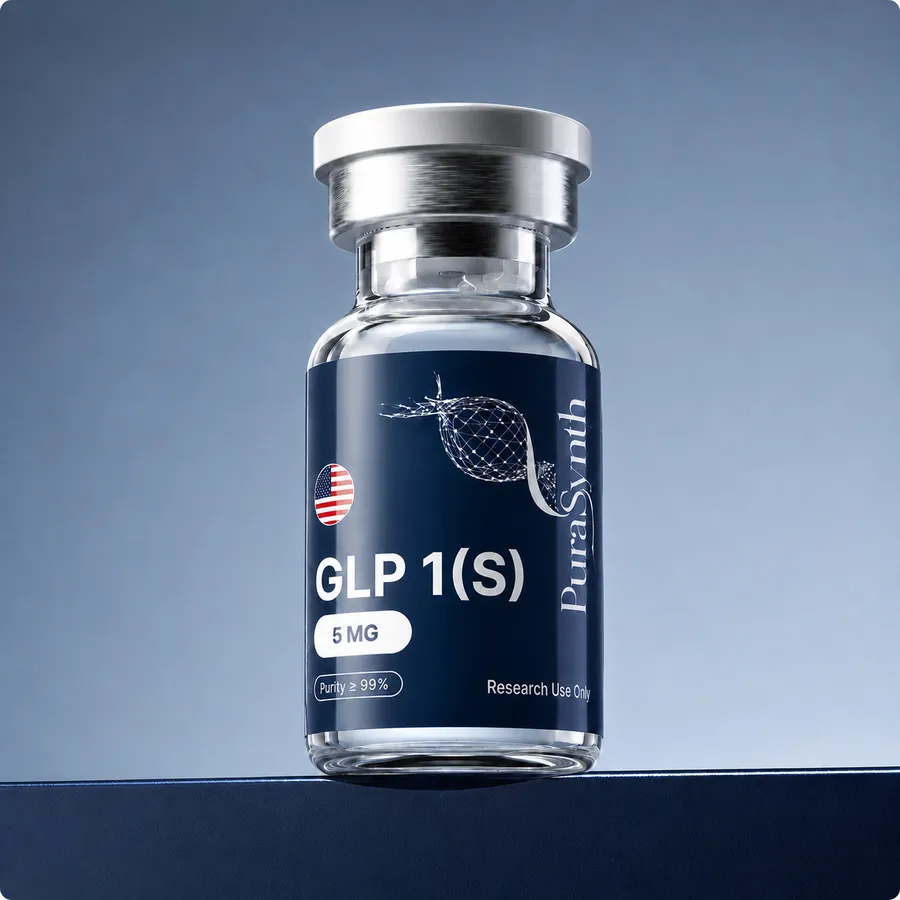
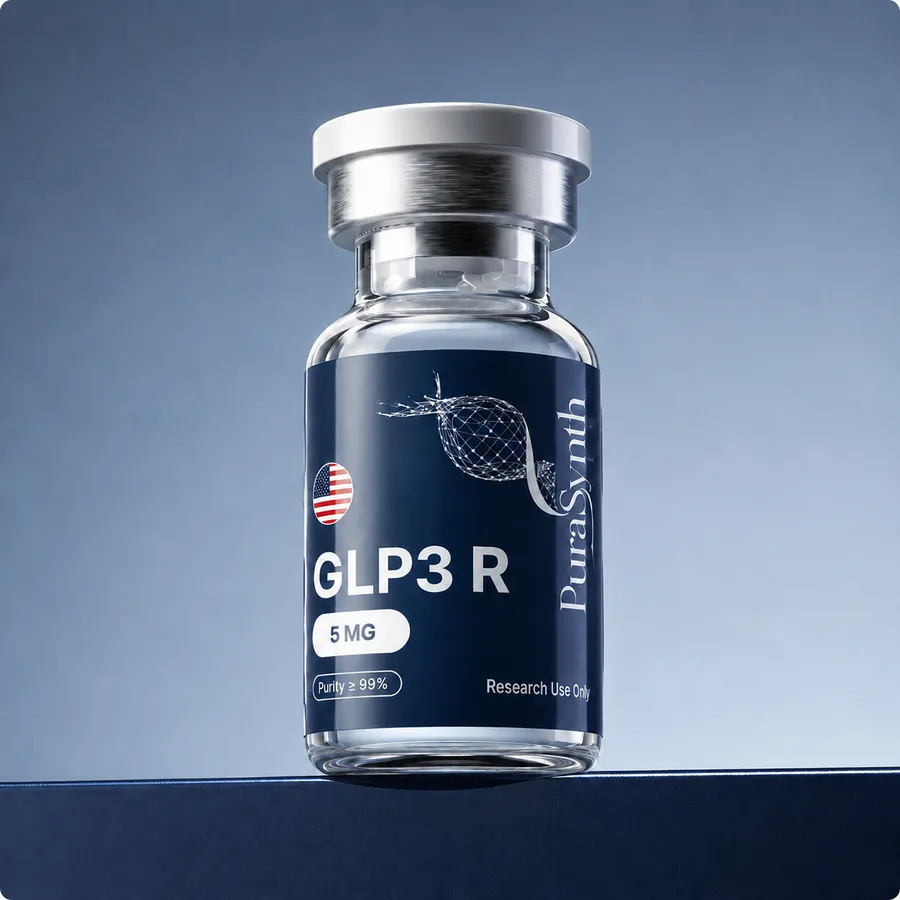
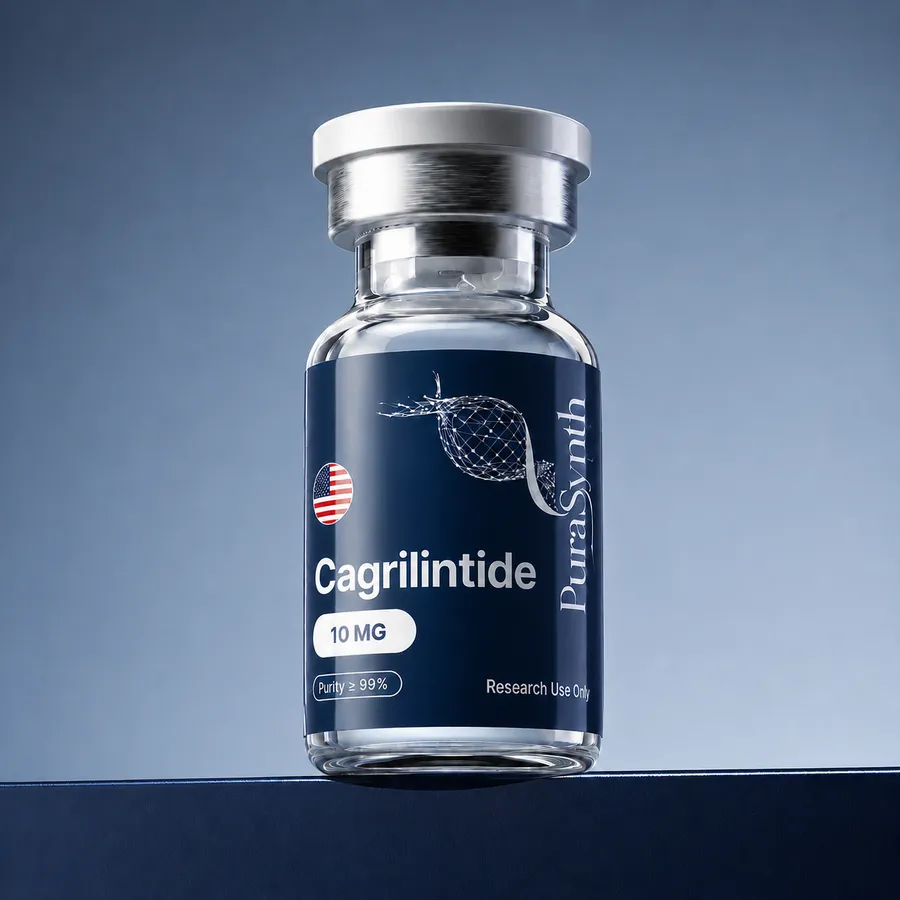
Across the catalog, these map to PuraSynth Labs's GLP research-analog line — spanning single-receptor, dual GIP/GLP-1, and triple GLP-1/GIP/glucagon analogs, plus an amylin analog studied in parallel — each offered as a lyophilized reference material with a lot-specific COA for in-vitro and preclinical research.
Research Use Only. The information above is provided for educational purposes and describes laboratory and in-vitro research only. All compounds referenced are sold strictly as research materials — not for human or veterinary use, consumption, diagnostic, or therapeutic applications. Nothing here is medical advice.