MOTS-C: Research, Potential Benefits, Safety, and U.S. Status
Learn what MOTS-C is, how it works, current research findings, safety concerns, and its regulatory status in the United States.
By PuraSynth Labs Research Team
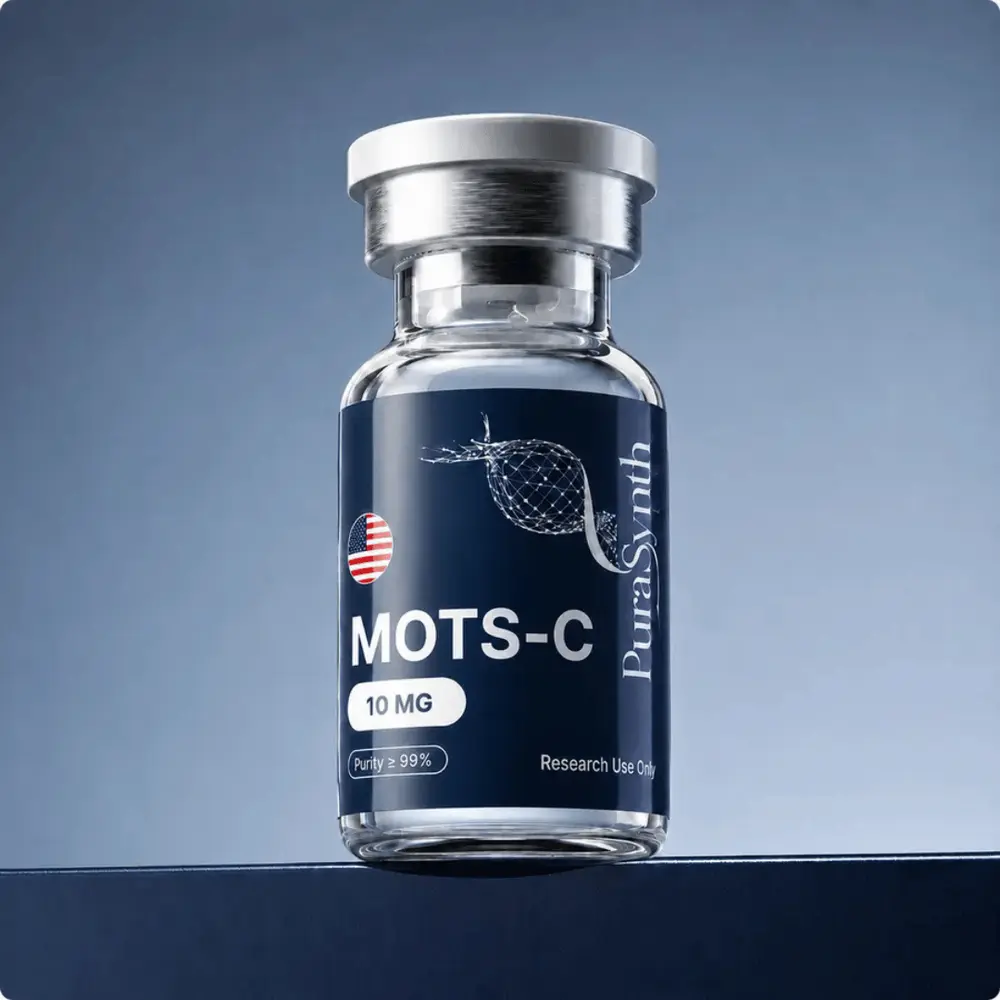
MOTS-C has attracted growing attention among researchers studying mitochondrial signaling, metabolic health, exercise adaptation, and healthy aging. However, online discussions often present early findings as proven human benefits. The scientific reality is more measured: MOTS-C is a naturally occurring mitochondrial-derived peptide with promising laboratory and animal data, but its safety and effectiveness as an administered treatment have not yet been established.
From a practical research-review perspective, the most important step is separating three different subjects: what MOTS-C naturally does in the body, what researchers have observed in cells and animals, and what has actually been demonstrated in controlled human trials. Those evidence levels are not interchangeable.
This guide explains the science in plain language, reviews the current evidence, and outlines the regulatory and safety issues that United States readers should understand.
Featured Definition: What Is MOTS-C?
MOTS-C is a naturally occurring 16-amino-acid peptide encoded within mitochondrial DNA. Researchers are studying its role in cellular energy regulation, glucose metabolism, stress responses, and exercise adaptation. Although early laboratory and animal findings are promising, administered MOTS-C remains investigational and is not an established treatment for weight loss, diabetes, aging, or athletic performance.
Table of Contents
- What MOTS-C means
- Why mitochondrial-derived peptides matter
- How MOTS-C may work
- What current MOTS-C research shows
- Human evidence versus animal evidence
- Potential areas of investigation
- MOTS-C and weight management
- MOTS-C and exercise performance
- MOTS-C and healthy aging
- Safety, side effects, and unknowns
- U.S. regulatory considerations
- Research-product evaluation checklist
- People Also Ask
- Expert MOTS-C Q&A
- Conclusion
What Does MOTS-C Mean?
MOTS-C stands for mitochondrial open reading frame of the 12S ribosomal RNA type-c. It is a short peptide containing 16 amino acids.
Most people learn that mitochondria generate energy for cells. That description is correct, but incomplete. Mitochondria also participate in cellular signaling, stress responses, inflammation, metabolism, and programmed cell death.
Researchers once assumed that mitochondrial DNA encoded only a small, fixed group of proteins involved mainly in energy production. The discovery of mitochondrial-derived peptides changed that view. These small signaling molecules suggest that mitochondria can communicate with the rest of the cell and potentially with distant tissues.
MOTS-C was first characterized in a 2015 Cell Metabolism study. The researchers reported that the peptide influenced metabolic homeostasis and insulin sensitivity in experimental models. They also observed protection against diet-induced obesity and insulin resistance in mice. Those findings helped establish MOTS-C as an important subject in mitochondrial biology.
However, the original results should not be interpreted as proof that administered MOTS-C produces the same effects in people.
Why Mitochondrial-Derived Peptides Matter
Mitochondria constantly respond to changes in energy demand, nutrient availability, exercise, illness, and environmental stress.
When a cell experiences metabolic pressure, it must decide whether to:
- Increase energy production
- Use stored fuel
- Repair damaged components
- Adjust glucose uptake
- Reduce unnecessary growth
- Activate stress-defense pathways
- Initiate cell death when damage is severe
Mitochondrial-derived peptides may help coordinate some of those responses. Therefore, scientists are investigating whether these peptides act as communication signals between mitochondrial activity and whole-body metabolism.
MOTS-C is especially interesting because research connects it with skeletal muscle, glucose utilization, cellular stress resistance, and AMPK signaling. Nevertheless, calling it an “exercise replacement” or “longevity treatment” goes far beyond the available evidence.
How Does MOTS-C Work?
The exact biological activity of MOTS-C is still being investigated. Current research suggests that it affects several connected pathways rather than acting through one simple mechanism.
MOTS-C and AMPK Activation
One frequently discussed mechanism involves AMP-activated protein kinase, commonly called AMPK.
AMPK functions like a cellular energy sensor. When cellular energy is low, AMPK helps shift the cell away from energy-consuming processes and toward pathways that restore energy balance.
For example, AMPK activation may support:
- Glucose uptake
- Fatty-acid oxidation
- Mitochondrial adaptation
- Energy conservation
- Cellular stress resistance
- Autophagy-related maintenance processes
The original MOTS-C research found that the peptide affected the folate-methionine cycle and purine synthesis. These changes increased levels of AICAR, a molecule associated with AMPK activation.
This mechanism is biologically meaningful. However, AMPK is influenced by many factors, including exercise, calorie availability, medications, hormones, and cellular stress. Therefore, activating an AMPK-associated pathway does not automatically establish a safe or effective therapy.
MOTS-C and Glucose Metabolism
Experimental studies suggest that MOTS-C may influence how skeletal muscle cells respond to glucose and insulin.
Skeletal muscle is a major destination for glucose after a meal. When muscle tissue becomes less responsive to insulin, blood glucose regulation can become more difficult. For that reason, researchers are studying whether MOTS-C-related signaling could contribute to metabolic flexibility.
Metabolic flexibility refers to the body’s ability to switch efficiently between fuels such as glucose and fatty acids. Impaired flexibility is often associated with insulin resistance, inactivity, aging, and metabolic disease.
Still, it is important to distinguish a plausible biological mechanism from a clinically proven outcome. Evidence that a peptide influences glucose pathways in cells or mice does not prove that using an externally manufactured version will safely improve blood sugar in humans.
Movement Between Mitochondria and the Nucleus
Under certain cellular stress conditions, research suggests that MOTS-C may move into the cell nucleus.
The nucleus contains most of the cell’s DNA and controls a large part of gene expression. Therefore, this movement may allow MOTS-C to influence how cells respond to metabolic stress.
This process is sometimes described as mitochondrial retrograde signaling. In simple terms, mitochondria send information back to the nucleus so the cell can adjust its behavior.
Researchers are investigating whether this signaling contributes to:
- Metabolic adaptation
- Antioxidant defenses
- Stress-response genes
- Inflammatory regulation
- Cellular survival
These mechanisms remain active research topics, and their clinical significance has not been fully established.
What Does Current MOTS-C Research Show?
The evidence base includes cell experiments, animal studies, observational human research, exercise-related human measurements, and emerging clinical investigation.
Each category answers a different question.
| Evidence type | What it can show | What it cannot prove |
|---|---|---|
| Cell studies | Molecular pathways and cellular responses | Safety or effectiveness in a whole human body |
| Animal studies | Biological effects across organs and tissues | That humans will experience the same benefits |
| Observational human studies | Associations between natural MOTS-C levels and health conditions | That MOTS-C causes or prevents the condition |
| Exercise studies | How natural MOTS-C changes during physical activity | The effects of externally administered MOTS-C |
| Controlled clinical trials | Safety, dosage, and treatment outcomes in participants | Broad effectiveness until studies are large and replicated |
This distinction is central to interpreting peptide research responsibly.
Cell and Laboratory Evidence
Laboratory experiments have connected MOTS-C signaling with AMPK activity, glucose transport, metabolic stress responses, inflammation, oxidative stress, and mitochondrial function.
These studies help scientists identify possible mechanisms. They can also guide future animal and human research.
However, cells grown in a laboratory do not reproduce the complexity of a human body. They lack full interactions among the liver, kidneys, immune system, cardiovascular system, nervous system, and endocrine system.
In addition, laboratory concentrations may not match levels that can be achieved safely in humans.
Animal Evidence
Mouse studies have generated many of the claims now repeated online.
Researchers have reported experimental effects involving:
- Insulin sensitivity
- Diet-induced weight gain
- Exercise capacity
- Muscle metabolism
- Inflammatory signaling
- Age-related physical decline
- Bone-related pathways
- Cardiovascular injury models
- Metabolic stress
For example, a Nature Communications study reported that exercise increased natural MOTS-C expression in humans and that MOTS-C administration improved physical performance and metabolic adaptation in mice. The administered-performance findings were primarily animal findings, not proof of equivalent performance benefits in people.
Animal studies are essential for scientific development. Nevertheless, many interventions that appear effective in mice do not later demonstrate acceptable safety or effectiveness in human clinical trials.
Human Evidence
Human research is considerably more limited.
Some studies have measured naturally occurring MOTS-C levels and explored associations with metabolic conditions, age, exercise, or other health variables. Such findings may show that MOTS-C is connected with human physiology.
However, an association does not establish causation.
For example, lower natural MOTS-C levels in people with a condition could mean:
- Lower MOTS-C contributes to the condition.
- The condition lowers MOTS-C.
- Another biological factor affects both.
- The association is indirect or population-specific.
Only carefully designed research can distinguish among these possibilities.
A registered Phase 2a study is evaluating investigational MOTS-C in adults with prediabetes and overweight or obesity. According to the trial record, the study is designed to compare 12 weeks of treatment with placebo and assess insulin sensitivity and safety. A registered or ongoing trial is evidence that a question is being investigated—not that the intervention has already been proven effective.
Readers can review the study record through the official ClinicalTrials.gov MOTS-C trial listing.
Potential MOTS-C Research Areas
MOTS-C is being investigated across several scientific fields. The following areas are promising research directions, not established medical uses.
Metabolic Health
The strongest scientific interest involves metabolic regulation.
Researchers are studying whether MOTS-C signaling affects:
- Insulin sensitivity
- Glucose uptake
- Energy expenditure
- Fat metabolism
- Mitochondrial stress
- Metabolic flexibility
The early evidence provides a reasonable basis for further research. Still, there is not enough high-quality human evidence to describe MOTS-C as a validated treatment for insulin resistance, prediabetes, type 2 diabetes, or obesity.
People managing blood glucose should not replace prescribed medication, nutrition guidance, or medical monitoring with an investigational peptide.
Skeletal Muscle Function
Skeletal muscle is one of the main tissues examined in MOTS-C research.
Exercise increases energy demand. In response, muscle cells must increase fuel use, manage oxidative stress, and repair damaged components. Research suggests that naturally occurring MOTS-C may participate in this adaptive process.
In the Nature Communications study, exercise increased MOTS-C expression in human skeletal muscle. Meanwhile, administered MOTS-C improved several physical-performance measurements in mice.
That combination is scientifically interesting, but the two findings are often incorrectly merged. The study did not establish that MOTS-C injections improve athletic performance in humans.
Cellular Stress and Inflammation
Some experimental studies suggest that MOTS-C may influence inflammatory signaling and cellular responses to oxidative stress.
Oxidative stress occurs when reactive molecules exceed the body’s ability to control or repair their effects. A certain amount of oxidative activity is normal and even necessary for signaling. Excessive or poorly controlled oxidative stress, however, can contribute to cellular damage.
MOTS-C has been studied in experimental models involving inflammation, tissue injury, and metabolic dysfunction. Yet these results are predominantly preclinical. They cannot support claims that MOTS-C treats inflammatory diseases in humans.
Aging Research
Mitochondrial function often changes with age. Therefore, mitochondrial-derived peptides have become relevant to aging research.
Scientists are examining whether age-related changes in MOTS-C signaling are associated with:
- Reduced metabolic flexibility
- Lower exercise capacity
- Muscle decline
- Cellular stress
- Insulin resistance
- Recovery differences
The term “longevity peptide” is frequently used in marketing. However, current research has not demonstrated that administered MOTS-C extends human lifespan or prevents aging.
Healthy aging is influenced by genetics, physical activity, sleep, nutrition, preventive healthcare, environmental exposures, socioeconomic conditions, and many other factors. No peptide should be presented as a substitute for those foundations.
MOTS-C and Weight Management
Weight-related claims require especially careful interpretation.
Early mouse studies suggested that MOTS-C could reduce diet-induced obesity and improve metabolic responses. However, mouse models are controlled experimental systems. Human weight regulation is considerably more complex.
It involves:
- Appetite
- Food availability
- Sleep
- Stress
- Medications
- Hormones
- Physical activity
- Muscle mass
- Genetics
- Social conditions
- Metabolic adaptation
There is not yet enough completed clinical evidence to claim that MOTS-C produces reliable weight loss in humans.
Moreover, a reduction in animal weight gain is not the same as clinically meaningful, sustainable weight loss in people. Human studies must evaluate body composition, adverse events, metabolic markers, treatment adherence, regain after treatment, and long-term outcomes.
Therefore, claims such as “MOTS-C burns fat” or “MOTS-C guarantees weight loss” are not supported by current evidence.
Is MOTS-C an Exercise Mimetic?
MOTS-C is sometimes described as an exercise mimetic because it appears to affect pathways that are also influenced by physical activity.
That phrase can be misleading.
Exercise creates a broad biological response involving:
- The cardiovascular system
- Skeletal muscles
- Bones and connective tissues
- Lung function
- Brain health
- Insulin sensitivity
- Blood pressure
- Coordination
- Balance
- Mood
- Sleep
- Social engagement
Activating one exercise-related pathway cannot reproduce all those effects.
It is more accurate to say that MOTS-C is being studied as a mediator of certain metabolic and stress-related responses associated with exercise.
Furthermore, competitive athletes should know that MOTS-C has been identified by the World Anti-Doping Agency as an example of an AMPK activator under prohibited hormone and metabolic modulators. Athletes subject to testing should review the current rules with their governing organization rather than relying on seller descriptions or social-media advice.
MOTS-C Compared With Established Metabolic Approaches
| Approach | Evidence in humans | Main purpose | Key limitation |
| Regular exercise | Extensive | Fitness, metabolic health, cardiovascular health, strength and function | Requires consistency and appropriate programming |
| Nutrition and weight-management support | Extensive but individualized | Energy balance, nutrient intake and metabolic risk reduction | Results vary by plan, adherence and medical context |
| FDA-approved medications | Varies by medication but requires clinical evidence | Treat a specific approved condition | Side effects, eligibility requirements and cost |
| MOTS-C | Early and investigational | Research into metabolic and mitochondrial signaling | Limited human efficacy and safety data |
| Online “peptide protocols” | Usually unsupported | Often marketed for weight loss, energy or longevity | Unverified dosing, uncertain quality and medical risk |
The comparison does not mean conventional options are risk-free. Instead, it illustrates the difference between interventions supported by substantial human evidence and an experimental research compound.
MOTS-C Safety and Possible Side Effects
A major limitation is the lack of robust, published human safety data.
Without large and well-controlled trials, researchers cannot confidently determine:
- The most appropriate dose
- Safe treatment duration
- Common adverse effects
- Rare but serious reactions
- Drug interactions
- Effects on pregnancy or fetal development
- Effects on liver and kidney function
- Cardiovascular risks
- Immune reactions
- Long-term metabolic consequences
- Cancer-related considerations
- Safety in older adults
- Safety in people with chronic diseases
Online reports sometimes mention temporary irritation, fatigue, headache, nausea, appetite changes, flushing, or altered blood glucose. However, informal reports cannot establish frequency, causation, or safety.
They may also involve mislabeled products, multiple substances, inconsistent concentrations, or undisclosed medical conditions.
Why Injection Risks Matter
When a substance is injected, risk does not come only from the active ingredient.
Additional concerns include:
- Microbial contamination
- Endotoxins
- Incorrect concentration
- Particulate matter
- Poor storage
- Degradation
- Mislabeling
- Nonsterile equipment
- Injection-site infection
- Accidental dosing errors
A label stating “research use only” does not demonstrate that a product is sterile, pharmaceutical-grade, or appropriate for administration to humans.
MOTS-C Regulatory Status in the United States
MOTS-C should not be described as an FDA-approved treatment.
The U.S. Food and Drug Administration evaluated MOTS-C-related bulk drug substances in connection with pharmacy-compounding policy. FDA briefing materials noted that MOTS-C had been proposed for uses including insulin resistance, obesity, osteoporosis, metabolism, and longevity. However, proposed uses and advisory evaluation do not equal approval.
FDA approval generally requires adequate evidence of quality, safety, and effectiveness for a defined use. That evidence is reviewed through a formal regulatory process.
Compounded products also differ from FDA-approved medications. Compounding can serve legitimate patient-specific needs under applicable law, but compounded drugs do not go through the same premarket approval process as FDA-approved products.
Readers seeking current administrative information can review the FDA’s human drug compounding resources.
This discussion is educational and does not constitute legal advice. Researchers, healthcare organizations, pharmacies, and sellers should obtain guidance from qualified regulatory and legal professionals regarding their specific activities.
How to Evaluate MOTS-C Research Information
Use the following numbered checklist before trusting a claim.
- Identify the study type.
Determine whether the evidence comes from cells, mice, observational human research, or a controlled clinical trial. - Check whether MOTS-C was administered.
A study measuring natural MOTS-C levels does not prove that taking an external product produces the same effect. - Look for a control group.
Controlled comparisons help separate treatment effects from normal variation, expectations, and outside influences. - Check the number of participants.
Very small studies may miss uncommon side effects and produce unstable estimates. - Review the measured outcome.
A laboratory marker is not always equivalent to better health, improved function, or longer survival. - Separate association from causation.
Two variables can change together without one causing the other. - Check the population.
Results in young healthy adults may not apply to older adults or people with diabetes, cardiovascular disease, or kidney impairment. - Look for independent replication.
One positive paper rarely settles a scientific question. - Review funding and conflicts of interest.
Commercial involvement does not automatically invalidate research, but it should be disclosed and considered. - Avoid guaranteed claims.
Phrases such as “proven fat burner,” “reverses aging,” or “risk-free” are warning signs. - Confirm the regulatory status.
Clinical-trial registration, compounding discussion, or patent activity does not mean FDA approval. - Examine product documentation carefully.
Identity, purity, quantity, and analytical testing are separate from sterility and human safety.
What Should Research Buyers Examine?
For legitimate laboratory research, documentation matters.
Researchers commonly review:
- Product identity
- Amino-acid sequence
- Molecular mass
- Lot or batch number
- Stated purity
- Analytical methodology
- Certificate of analysis
- Storage requirements
- Handling instructions
- Reconstitution information for laboratory procedures
- Intended-use restrictions
- Supplier traceability
High-performance liquid chromatography may help assess purity, while mass spectrometry may help confirm molecular identity. Nevertheless, a purity percentage alone does not establish sterility, potency, stability, endotoxin control, or suitability for human use.
Researchers reviewing MOTS-C for controlled laboratory research should evaluate the available batch documentation and ensure that all handling complies with their institution’s approved protocols.
Common MOTS-C Myths
Myth 1: MOTS-C Has Been Proven to Reverse Aging
No controlled evidence shows that MOTS-C reverses human aging. Research on age-related pathways and physical function in mice is not proof of human rejuvenation.
Myth 2: MOTS-C Replaces Exercise
MOTS-C may participate in certain exercise-responsive pathways. It does not reproduce the full cardiovascular, muscular, skeletal, neurological, and psychological effects of physical activity.
Myth 3: A Naturally Occurring Peptide Must Be Safe
Natural occurrence does not guarantee that externally administering a concentrated or synthetic version is safe. Insulin, thyroid hormones, and many other natural molecules can cause serious harm when used incorrectly.
Myth 4: High Purity Means Pharmaceutical Grade
Purity is only one quality measure. Pharmaceutical suitability also involves manufacturing controls, sterility, stability, potency, contamination testing, packaging, and regulatory oversight.
Myth 5: Clinical-Trial Registration Proves Effectiveness
Registration shows that researchers intend to investigate a question. Results may be positive, negative, inconclusive, or unavailable.
People Also Ask About MOTS-C
Is MOTS-C FDA approved?
No. MOTS-C is not an established FDA-approved treatment for obesity, diabetes, aging, or performance enhancement. FDA consideration of a substance in a compounding-policy context does not constitute approval of a drug product.
What does MOTS-C do in the body?
Naturally occurring MOTS-C appears to participate in mitochondrial communication, cellular energy sensing, glucose metabolism, and stress adaptation. Researchers are still determining how important these functions are across different tissues and health conditions.
Does MOTS-C help with weight loss?
Animal studies have reported effects on diet-induced weight gain and insulin sensitivity. However, completed human evidence is insufficient to conclude that administered MOTS-C causes safe, reliable, or sustainable weight loss.
Is MOTS-C the same as exercise?
No. MOTS-C may influence some pathways that also respond to exercise, especially AMPK-related metabolic signaling. Exercise affects many more systems and provides benefits that cannot currently be replaced by a peptide.
Can athletes use MOTS-C?
Athletes subject to anti-doping rules should treat MOTS-C as prohibited and check the current WADA list and their governing organization’s policies. Product contamination and ingredient mislabeling can create additional anti-doping risks.
Expert Q&A About MOTS-C
1. Why is mitochondrial DNA encoding unusual?
Most proteins are encoded by DNA in the cell nucleus. MOTS-C is notable because its sequence originates within mitochondrial DNA, supporting the idea that mitochondria produce signaling peptides in addition to proteins involved in energy generation.
2. Can blood MOTS-C levels diagnose metabolic disease?
Not at present. Research may find associations between circulating MOTS-C and certain conditions, but there are no widely established diagnostic thresholds or standardized clinical interpretations for routine patient care.
3. What is the difference between endogenous and exogenous MOTS-C?
Endogenous MOTS-C is naturally produced within the body. Exogenous MOTS-C refers to material introduced from outside the body. The behavior, concentration, distribution, breakdown, and safety of an administered product may differ from normal physiological signaling.
4. Why can’t researchers assume that animal doses apply to humans?
Species differ in metabolism, body composition, immune response, peptide breakdown, organ function, and disease biology. Human dose selection requires pharmacokinetic, pharmacodynamic, toxicology, and clinical safety data rather than simple body-weight conversion.
5. What evidence would make MOTS-C more clinically convincing?
Stronger evidence would include completed randomized controlled trials, adequate participant numbers, transparent adverse-event reporting, meaningful clinical outcomes, independent replication, defined manufacturing standards, and long-term follow-up.
Conclusion
MOTS-C is a scientifically important mitochondrial-derived peptide with potential roles in energy regulation, glucose metabolism, cellular stress responses, and exercise adaptation.
The research is promising because it expands our understanding of how mitochondria communicate with cells and tissues. At the same time, most therapeutic claims remain ahead of the evidence.
Cell and animal studies provide hypotheses, not treatment guarantees. Human studies examining naturally occurring levels do not prove that external administration is beneficial. Moreover, ongoing clinical research should be viewed as an investigation rather than confirmation.
For United States readers, the most responsible approach is to recognize MOTS-C as an investigational research subject. It should not be promoted as an approved weight-loss treatment, diabetes therapy, exercise replacement, or anti-aging solution.
Researchers considering MOTS-C should focus on verified identity, analytical documentation, controlled procedures, institutional oversight, and accurate interpretation of evidence. Above all, scientific claims should remain proportional to the quality of the human data.
Research Use Only. The information above is provided for educational purposes and describes laboratory and in-vitro research only. All compounds referenced are sold strictly as research materials — not for human or veterinary use, consumption, diagnostic, or therapeutic applications. Nothing here is medical advice.