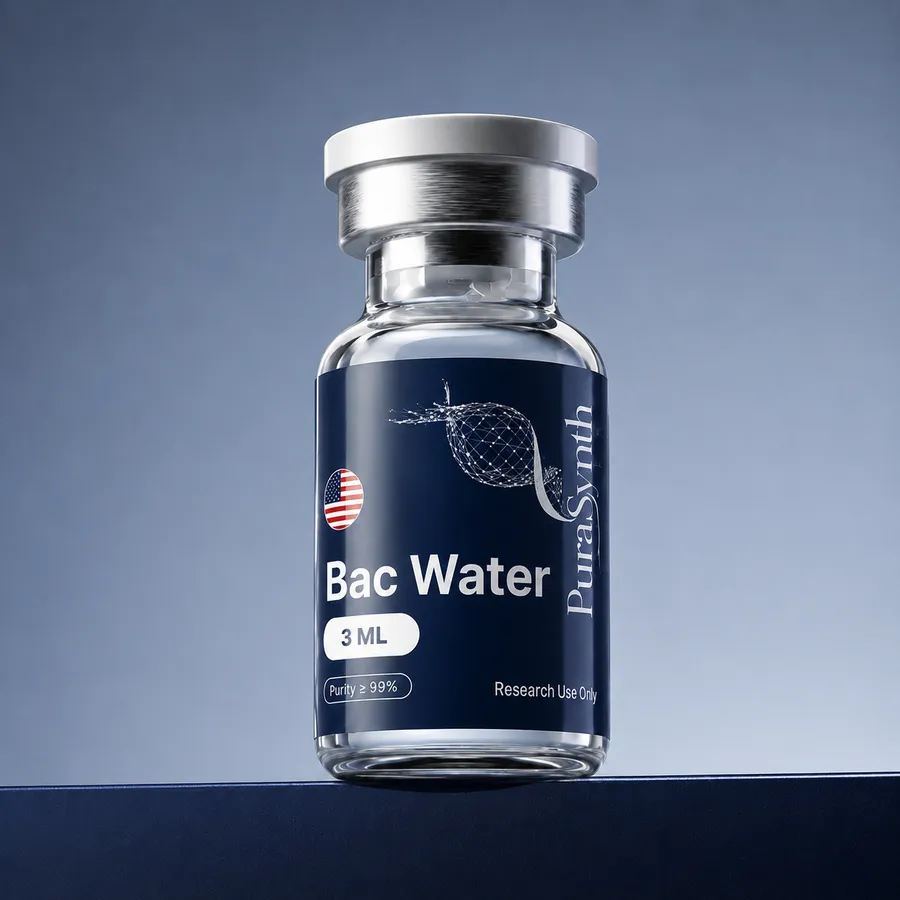
Storage & Stability: Keeping Research Peptides Intact
A practical lab guide to storing research peptides, lyophilized and reconstituted, to preserve integrity for in-vitro work.
By PuraSynth Labs Research Team
Peptides are sensitive research materials. Their integrity depends not only on how they were synthesized and purified, but on how they are handled and stored once they reach the laboratory. Hydrolysis, oxidation, aggregation, and microbial contamination can all alter a peptide over time, and the rate at which these processes occur is governed largely by temperature, moisture, light, and physical form. For reproducible in-vitro work, storage is not an afterthought. It is part of the experimental method.
This guide outlines general laboratory practices for preserving the stability of research peptides handled strictly as research materials in a laboratory setting. Storage requirements vary by sequence, length, and the presence of oxidation-prone or otherwise labile residues, so treat the following as a starting framework rather than a universal rule, and confirm the requirements for any specific compound against its documentation and Certificate of Analysis.
Lyophilized Powder vs. Reconstituted Solution
Physical form is the single biggest factor in peptide stability. In lyophilized (freeze-dried) powder form, a peptide contains very little water, and the chemical reactions that drive degradation are dramatically slowed. Lyophilized material is therefore far more stable, and generally more forgiving of brief temperature excursions, than the same peptide in solution.
Once reconstituted, the peptide is dissolved in an aqueous environment where hydrolysis, oxidation, and microbial growth proceed much faster. Reconstituted solutions degrade more quickly and have a meaningfully shorter usable window. As a general practice, keep a peptide in its dry, lyophilized state until an experiment requires it in solution.
General Storage Temperatures
Lower temperatures slow the reactions that compromise peptide integrity. In broad terms, the colder and drier the storage, the longer the material is likely to remain intact. The following are general guidelines for laboratory storage of research peptides:
- Lyophilized powder, short transit or brief handling: room temperature is typically tolerated for short periods, which is why dry material can ship without a cold chain.
- Lyophilized powder, short-term laboratory storage: refrigeration around 2-8 C is a common choice for material that will be used within a relatively short timeframe.
- Lyophilized powder, long-term storage: -20 C or colder is generally preferred, with -80 C used for extended archival storage of sensitive sequences.
- Reconstituted solution: keep cold, store refrigerated or frozen as aliquots, and use within a limited window appropriate to the compound rather than holding it indefinitely.
Aliquot to Avoid Freeze-Thaw Cycles
Repeated freezing and thawing is one of the most common and avoidable causes of peptide degradation. Each cycle subjects the molecule to mechanical and chemical stress that can promote aggregation and loss of intact material. The practical solution is to divide a reconstituted stock into single-use aliquots before freezing, so that each working portion is thawed only once.
- Reconstitute the full quantity of stock you intend to freeze in a single step.
- Dispense it into multiple small, clearly labeled vials sized to individual experiments.
- Freeze the aliquots, then thaw only the volume needed for a given run, discarding any thawed excess rather than refreezing it.
Light, Moisture, and Air
Beyond temperature, three environmental factors degrade peptides in storage. Light can drive photochemical reactions, particularly in sequences containing photosensitive residues, so amber vials or opaque enclosures help. Moisture re-hydrates lyophilized powder and accelerates hydrolysis, which is why desiccant and tightly sealed vials matter so much for dry material. Exposure to air introduces oxygen that can oxidize susceptible residues such as methionine and cysteine.
Keep it dry and sealed
Allow frozen or refrigerated vials to warm to room temperature before opening. This prevents atmospheric moisture from condensing onto cold powder, which would defeat the purpose of dry storage. Reseal promptly and keep desiccant intact.
Recognizing Signs of Degradation
Visual inspection is a useful first check before using stored material, though it cannot replace analytical methods such as HPLC or mass spectrometry. Observations that may indicate a compromised sample include:
- Cloudiness or turbidity in a solution that should be clear.
- A change in color of the powder or solution.
- Visible precipitate, particulates, or aggregates settling out of solution.
- Difficulty redissolving material that previously went into solution cleanly.
Any of these warrants treating the result with caution. Because degradation is often partial and not visible to the eye, samples intended for sensitive measurements may merit analytical re-checking after extended storage.
Why Storage Is the Researcher's Responsibility
A Certificate of Analysis documents purity and identity as measured at the time of testing, before the material leaves PuraSynth Labs. It is a snapshot, not a guarantee of indefinite stability. Once a peptide is delivered, its condition is shaped entirely by how it is stored and handled in the receiving laboratory. Disciplined cold storage, careful aliquoting, protection from light, moisture, and air, and routine inspection are what carry the integrity reflected on the COA through to the bench, and that responsibility rests with the researcher.
Research Use Only. The information above is provided for educational purposes and describes laboratory and in-vitro research only. All compounds referenced are sold strictly as research materials — not for human or veterinary use, consumption, diagnostic, or therapeutic applications. Nothing here is medical advice.